
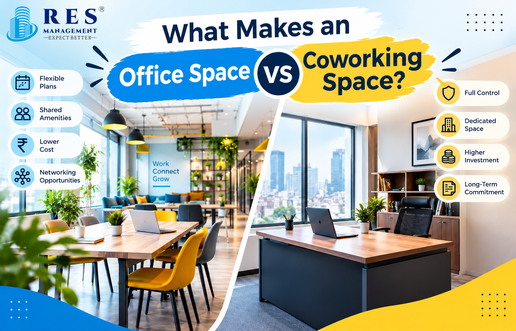
Choosing the right workplace is an important decision for any business. A suitable office can affect employee productivity, operating costs, client experience, and even how easily a company can grow. Today, businesses have more choices than simply renting a conventional office. A coworking space has become a practical alternative for freelancers, startups, small businesses, and established companies.
Although both options provide a professional place to work, they operate differently. A traditional office gives one company control over a dedicated property, while coworking provides a flexible workplace shared by multiple businesses and professionals.
Understanding these differences can help businesses decide whether a traditional office or a Coworking Space For Rent is more suitable for their needs.
What Is a Coworking Space?
A coworking space is a shared professional workplace where individuals, startups, and companies can work from a managed office environment. Instead of renting an entire commercial property, members generally pay for the amount of workspace they require.
Depending on the provider, a coworking space may include dedicated desks, private cabins, meeting rooms, high-speed internet, reception facilities, common areas, housekeeping, and other office services.
One of the main advantages is flexibility. A freelancer may need only one desk, while a growing business could require several workstations or a private office. This makes co working office space suitable for businesses with different team sizes and changing requirements.
For companies considering this model, the RES Management coworking space options provide a starting point for exploring flexible workplace solutions.
What Is a Traditional Office Space?
A traditional office is a dedicated workspace occupied by one organisation. The company usually rents or owns the property and has greater freedom to decide how the office should look and operate.
This can be useful for businesses that need complete control over their workplace. They can choose the furniture, branding, office layout, meeting areas, security arrangements, and other facilities according to their requirements.
However, that control also comes with additional responsibilities. Businesses may need to arrange interiors, furniture, electricity, internet connections, maintenance, cleaning, security, and other operational requirements.
Therefore, when comparing office options, businesses should consider the complete occupancy expense rather than looking only at the monthly rent.
Coworking Space vs Office Space: What Is the Difference?
The biggest differences between the two models usually involve cost, flexibility, control, setup requirements, and scalability.
Cost and Financial Commitment
Coworking space cost is often structured around the number of seats, type of workspace, and facilities included in the membership.
A traditional office, meanwhile, can involve several expenses beyond rent. These may include security deposits, interior work, furniture, utilities, maintenance, technology infrastructure, and ongoing facility management.
With coworking, many of these workplace requirements are already managed by the provider. However, pricing and inclusions differ between providers, so businesses should always check the agreement carefully.
Businesses can review the coworking space cost to understand the different expenses that may need to be considered before choosing a workspace.
Flexibility
Flexibility is one of the most noticeable differences.
A conventional office lease can require a longer commitment. If the company grows quickly, it may eventually need a larger property, which can mean another lease, new interiors, additional furniture, and moving costs.
A coworking arrangement can make expansion easier. Businesses may be able to add seats, move into a private cabin, or change their workspace according to their requirements.
This can be particularly useful for startups and businesses that are still determining their long-term team size.
Office Setup and Maintenance
Setting up a traditional office requires time and planning. From desks and chairs to internet connectivity and meeting rooms, the business is responsible for creating the workplace.
A coworking space is generally ready to use. Basic infrastructure and workplace facilities are already available, allowing businesses to start working without spending significant time setting everything up themselves.
Maintenance is another important distinction. In a traditional office, the company may have to coordinate repairs, cleaning, utilities, and other facility-related tasks. In a managed coworking environment, these responsibilities are generally handled by the workspace operator.
Privacy and Control
Traditional offices provide a higher degree of physical control. A company can design the workplace specifically around its employees, workflow, branding, and security requirements.
A coworking environment is shared, although many providers offer private offices and cabins for businesses that need additional privacy.
Companies handling sensitive client information should check the privacy arrangements, access controls, meeting-room availability, and security measures before selecting a coworking space.
Networking Opportunities
A traditional office usually brings employees from the same company together. A coworking environment can have professionals from different industries working under the same roof.
This can create opportunities for networking and professional connections. A startup might meet a marketing consultant, technology professional, designer, accountant, or potential business partner within the same workplace.
However, the networking experience depends on the community and management of the individual co working place. Businesses should therefore visit a workspace and understand its environment before making a commitment.
Which Businesses Can Benefit From Coworking?
There is no universal answer when deciding between a coworking space and a traditional office. The right option depends on the business model, team size, budget, and working requirements.
A Coworking Space On Rent may be worth considering for:
Freelancers and independent professionals
Startups and early-stage businesses
Small and medium-sized companies
Remote teams requiring occasional office access
Businesses entering a new city
Companies experiencing rapid team growth
Businesses that do not want to manage office infrastructure themselves
A traditional office may be more appropriate for companies that require extensive customisation, specialised infrastructure, strict access control, or a long-term dedicated environment.
The key is to understand the business's actual requirements before selecting a workplace.
What to Consider Before Renting a Coworking Space?
If you are looking for a co working space in Ahmedabad, do not make your decision based only on the advertised price.
Start with the location. Consider accessibility for employees, clients, and visitors. A well-connected workplace can make daily commuting and meetings more convenient.
Next, calculate the complete coworking space cost. Check whether internet, electricity, housekeeping, meeting rooms, parking, printing, maintenance, and other facilities are included or charged separately.
The physical environment also matters. Visit the workspace and check seating comfort, noise levels, lighting, ventilation, meeting rooms, privacy, security, and internet reliability.
Finally, read the agreement carefully. Pay attention to the notice period, deposit, additional charges, access hours, guest policies, and rules for increasing or reducing the number of seats.
The co-working space guide can also help businesses understand important factors to consider before selecting a flexible workspace.
Why Coworking Is Growing in Ahmedabad
Ahmedabad has a diverse business environment with startups, technology companies, consultants, agencies, professional service firms, and established businesses. Their office requirements can vary considerably.
One company may need a single desk, while another may require a private cabin or several coworking office spaces for its employees. Flexible workspace models allow businesses to choose an arrangement that better matches their current requirements.
For businesses comparing coworking Ahmedabad options, factors such as location, pricing, facilities, privacy, accessibility, and scalability should all be considered.
Businesses searching for coworking in Ahmedabad can explore workspace options offered by RES Management, including its coworking space for rent solutions.
Understanding the Bigger Commercial Real Estate Picture
The choice between a traditional office and coworking also connects with wider changes in commercial real estate India.
Businesses increasingly need workplaces that can adapt to changing team structures and working patterns. Instead of committing immediately to a large permanent office, some companies prefer flexible arrangements that allow them to test a location and adjust their space requirements over time.
This does not mean traditional offices are becoming irrelevant. Many organisations still need dedicated premises because of their size, operational requirements, privacy expectations, or preference for complete control.
The decision should therefore be based on business requirements rather than simply following a workplace trend. Understanding the broader commercial real estate India landscape can help businesses make more informed property decisions.
Final Thoughts
The difference between a coworking space and a traditional office comes down to how a business wants to manage its workplace.
A traditional office offers greater control and customisation but usually requires more responsibility for setup, maintenance, and long-term commitments. A coworking space provides a ready-to-use environment with greater flexibility and shared facilities.
For a freelancer, startup, or growing company, a Coworking Space For Rent can provide the flexibility needed during different stages of business growth. For an established organisation with specific infrastructure and privacy requirements, a traditional office may provide the level of control it needs.
When comparing the best coworking spaces in Ahmedabad, businesses should look beyond the desk price. Location, facilities, privacy, contract terms, accessibility, scalability, and the overall working environment all deserve attention.
Ultimately, the right Coworking Space is one that fits the way your business works today while leaving enough room to adapt to tomorrow's requirements.
For workspace enquiries or more information, businesses can contact RES Management.
FAQs
1. What is the main difference between a coworking space and an office space?
A coworking space is a shared workplace used by multiple professionals or businesses, while a traditional office is generally dedicated to one company. Coworking spaces typically offer greater flexibility, shared facilities, and ready-to-use infrastructure.
2. Is a coworking space cheaper than a traditional office?
The total cost depends on the location, team size, lease terms, and facilities required. A coworking space can reduce setup, furniture, maintenance, and infrastructure expenses, while a traditional office may involve more upfront and ongoing costs.
3. Is a coworking space suitable for small businesses?
Yes. Small businesses can use coworking spaces to access professional workspaces without committing to a large office. They can also choose the number of desks or private spaces according to their current requirements.
4. What should I look for when choosing a coworking space in Ahmedabad?
Consider location, accessibility, workspace options, internet connectivity, meeting rooms, privacy, security, parking, included facilities, contract terms, and the complete coworking space cost before making a decision.
5. Can I rent a private office within a coworking space?
Yes. Many coworking providers offer private cabins, dedicated offices, and team workspaces in addition to shared desks. The available options depend on the provider and location.
6. How long can I stay in a coworking space?
The duration depends on the provider's membership and agreement options. Some businesses use coworking spaces for a few months, while others operate from them for several years. Always check the minimum commitment and notice period before signing an agreement.


